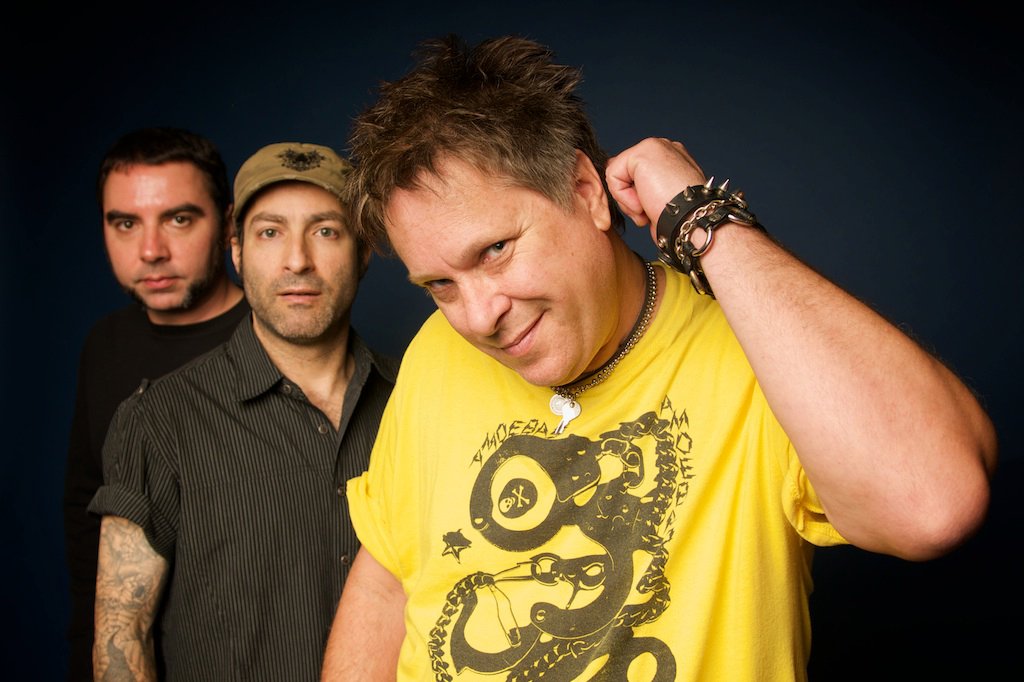
Photo by Joe Maier
There’s nothing shocking about The Subhumans coming to town, as they have a number of times since reforming in the late nineties. Typically, though, it seems that their shows out here are thrown together by random promoters regardless of their connection to the local punk community. This time around, local prodigal punk, event organizer and promoter Will Anderson took on the feat of not only setting up one helluva show for The Subhumans, but also did all of the leg work that comes with really putting together an amazing show. And, with a lineup including youthful Gilbert ska-core kids The Linecutters as well as old-school Cape Cod to Phoenix hardcore punk transplants The Freeze, playing the somewhat recently reformed Mesa punk venue The Nile, The Subhumans played about as close to a DIY punk show as a well-established punk band with an incredible cult following could get out here.
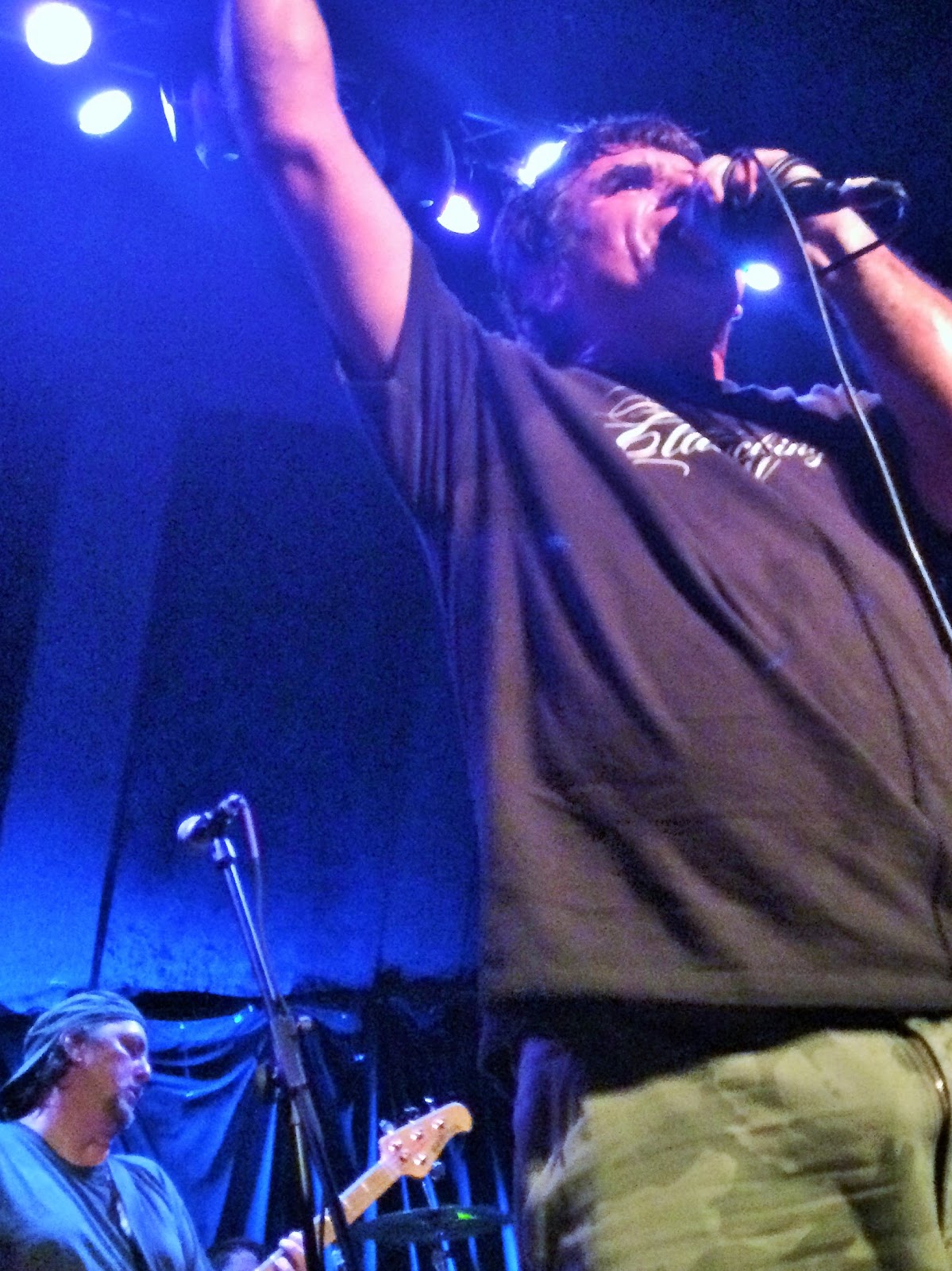
Photo by Garyn Klasek
Before the doors even opened, local punks of all ages had already started lining up around the block to enter while openers The Linecutters set up. When they began their set, they busted out, immediately, with the fierce, fast-paced punk that I’ve come to love hearing from them over the years. It had been quite some time since I had seen them but quickly recalled why I dig them so much. Between bassist Jett Smith’s hypnotically dancy grooves and guitarist Marceliano LaPlace Festa’s rhythmic melodies and shredding, they really got the crowd moving. Drummer Jon Heiligenthal’s thrash-crazed drumming got the punks moshing in no time, as well. Even the aggressive vocals of Festa and Smith whipped the audience into a frenzy.
Photo by Joe Maier
Totally surprising was the newly local punk band The Freeze. Even when I was really into early American hardcore, especially on the east coast, I was super into the DC shit. The fact I had never really heard of these guys, let alone never hearing their music, set me up for one magnificent surprise. I’ve seen their drummer, Aaron Hjalmarson, play a number of times in various local punk bands like Manual Sex Drive, Travis James & The Acrimonious Assembly of Arsonists and even the punkgrass band The Haymarket Squares so I should’ve expected the driving energy and fun of The Freeze. For being a new member, you certainly wouldn’t have noticed, especially with the skill level he encompasses. Hjalmarson brought his typical A-game of frantic yet precise drumming to The Freeze that worked really well between the tuneful yet cadent guitarists Dave Barbee and Zach Carmichael and bassist Molusk’s intense basslines. Combined with Clif Croce’s vicious vocals, The Freeze rampaged the swarm into a pit.
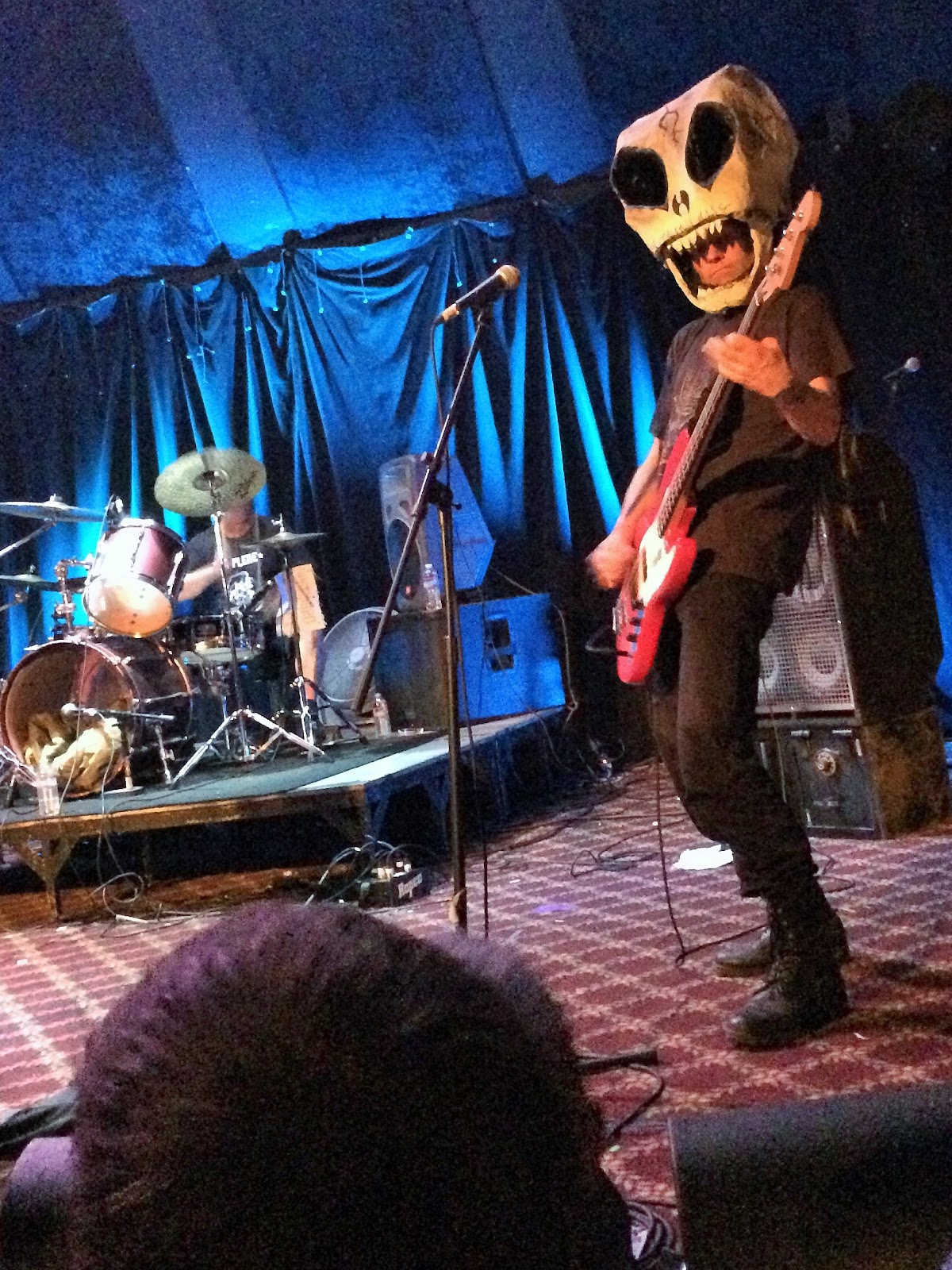
Photo by Joe Maier
Wrapping up the show was, who everyone had been waiting for months to see, The Subhumans. They performed a fantastic mix of old and new songs, including classics like “Mickey Mouse Is Dead”, “All Gone Dead” and “Subvert City”. Guitarist Bruce Treasure never fails to surprise with his resonant yet rhythmic performance. Phil Bryant, also, killed it marvelously with his melodic bass playing. At one point, someone threw a Subhumans skull mask on him to the delight of the horde. Drummer Trotsky raged so hard that everyone erupted into a circle pit with fervor. With Dick Lucas’ enflamed vocals, we all shouted along, eating out of the palm of his hands. On the whole, not only was it a blast to catch The Subhumans again but it was amazing to see them play such an insane punk show with such an extraordinary local bill.
If all this wasn’t enough, I had the fortunate circumstance of interviewing Lucas before the show:
What was it like back in early 80s Wiltshire when y’all first started The Subhumans?
There were several bands going at once in a town called Warminster. We were all practicing at the same youth center. There was The Subhumans, Organized Chaos and The A-Heads all going at roughly the same time, members of which had all been in previous bands like The Stupid Humans and Audio Torture so it had been building up. It was very good almost every weekend for a few years, hanging out together after practice and getting drunk, just a really good social life with lots of good friends made and kept. We had a couple of local venues, pubs and that, to do gigs in. Most of the gigs for the first few months of The Subhumans’ existence were in the local Wilkshire area. Then, for ourselves, we got taken out of the area by Flux of Pink Indians who heard us and liked us. They gave us a little mini-tour of eight dates around the UK and that was our first venture out of West Wilks. Wilks is a very conservative area so we were lucky to have somewhere to practice in at all that we could make all the noise necessary. It was a good scene.
What was it like working with Flux of Pink Indians?
We didn’t work with them that much, apart from doing gigs with them. We’d meet them occasionally; they’d be there at some of the studios when we were recording to go out on their Spiderleg records. We met Derek and Colin most out of the four members of the band. Derek was quite hardcore anarcho; we did a gig with him once. I remember him saying that if kids were coming along to gigs to be entertained then he’d just make that sort of throat-slitting motion. He said, “Forget it, it’s not for entertainment.” We thought, “Well, surely it’s got to be a bit for entertainment because people won’t like you otherwise.” He had a more hardcore anarcho attitude than we did perhaps. I guess we learned how other people think a bit more, a bit wider.
What were your favorite bands to play with back then?
Playing with them was good because we really liked them. We played with The System a couple of times; they’re a very good early eighties anarcho band who unfortunately only made one demo tape. For ages, they weren’t on vinyl at all, probably one single, but that demo tape was like the best one going on. The currency of punk music was all on cassettes at this point. To make a record was an amazing leap forward in the early eighties. Expensive. It was very expensive. Bands couldn’t afford to make their own records. You’d have to have someone provide the backing for it, so to speak, without being on a major label because nobody wanted to do that, either. So, you could be on an indie label. John Loder, who used to be friends with Crass before they were Crass, helped finance the setting up of Crass Records releases to release Crass’ records and, then, they released Flux of Pink Indians on Crass. Flux wanted to do the same label thing so John financed them to do Spiderleg and Dandelion financed us to do Bluurg Records. We released The Instigators and then they started their label and so on. Somebody saw a chain reaction, a very quick one, between bands forming their own labels and the bands they released forming their own labels as well because it’s a nice statement of independence.
What was the initial response like from the punk community when y’all released The Day The Country Died?
It seemed like they had been waiting for it because it sold something like 9,000 in the first month. Nice. It was absolutely insane! We all had checks sent to us by John for like one thousand pounds each and, then, that was it. I quit my job and I’ve never worked since. It was, like, brilliant. Three thousand pounds then was worth five thousand pounds now, maybe.. damn.. with inflation, by now. That was actually quite a long time ago now. I was working for like 75 pounds a week and then to get one thousand pounds is like, “Wow! This is like 500 years of wages and I hate work anyway so fuck it.”
How did the band react to its popularity?
We just got more and more gigs and did more and more every weekend. We just got one here and an offer for one here. There was no internet so it was all done by phone and letter. We just did as many gigs and practices [as possible]. It was weekly. We were up to three songs a week, just really knocking them out. There’s a lot of creativity going on.
What inspired y’all to start Bluurg Records?
The inspiration of seeing Flux do their own label, that sort of thing, and, because with John there doing the financing, it meant, “What could we release a record by a local band?” We released The A-Heads; they were local to us and basic bands that we liked, like Naked and The Instigators, who were an amazing band back in the early eighties, First time I saw them, I was like, “Wow, this song has loads of punch, dynamism and politics.” It was a good mix.
What led the band in the direction you took musically as you developed From the Cradle to the Grave?
What happened there is that I had written this really, really long song that just went on and on and on and on. So, the problem was “How are you going to fit that to music?” and Bruce had all these disparate, separate ideas that he’d been working on that didn’t really fit anything that we had done so far and weren’t specifically all very punk rock-ish tunes. But he sort of put them all together and over about three, five weeks of practices, we sort of taped it all up together and fit the words around the tunes and repeat this then and just worked on it and it all came together.
How much had the English punk community changed between the early eighties and the mid-eighties?
By the mid-eighties, ‘85-’86, a lot of bands, including us, were splitting up. Conflict had split up for the first time; we split up for the first time. The anarcho-punk thing had kinda, not fizzled out, but it was no longer the main focus of attention of a lot of punks. There was a lot of new ways of playing punk music: Discharge were coming along, Napalm Death are coming along, Toy Dolls are coming along. Oi had been invented by Garry Bushell which kinda split the scene down the middle, completely for his own ego, if you ask me, which you are. There was a lot of diversity setting into punk, which is good. Diversity is a good thing and punk started off as a very diverse scene anyway but it had become a bit narrowly, “You’re either in the political punk bands or you’re in the oi punk bands.” And that seemed to be all there was according to the music press and we were all devouring the music press because, as I said, to see what’s going on. There was a lot of fanzines and they were mostly politically orientated fanzines. Then, right around the mid-eighties, quite a few bands split up. Discharge had gone slightly metallish; they were experimenting with being metal and a lot of people went off of them at that point. That’s a shame. They took a couple of steps back after that. So, we had a discussion about where the band was going musically. We didn’t agree at that point so we stopped at that point.
Do The Subhumans still have mixed feeling in regards to the band’s sound around the time of Worlds Apart?
We’ve never discussed it. That’s cool. I think Worlds Apart is one of the best albums we ever did and the 29:29 Split Vision was a real mixture: side one was the old songs we never put on anything previously and side two was new songs that we hadn’t even played live. It was weird; we kinda split up, in theory, by doing the last gigs, did three last shows and then we had another practice inventing new songs to go with the old ones, these old songs, wasted or release them. And then Bruce said, “I got this idea,” and I saw some some lyrics and we invented like “Somebody’s Mother” and the song “Worlds Apart,” side two, basically, and the song “New Boy”. I never really liked that; I think it was a failed idea, really, a bit too poetic, not enough music in it. That’s the way Bruce is going on on his guitar, invention of tunes. He did invent most of The Subhumans’ tunes after all. That’s the way he was going: more complicated, less intense in a punk rock sense of intense. That’s just the way he went. When we reformed, he rediscovered how much fun it was to play the old songs and the songs we invented for Internal Riot, which was a few years later, well, decades later in the eighties, still reflects his ability and love of playing punchy, dynamic music. So, it’s good that he sort of went away but came back.
Was the release of Internal Riot more for the band or the fans and what was it like for The Subhumans to record again?
I don’t think it’s any different recording for the band or the fans. It was never a plan to do it for one reason or another. We did it because it had been ages since we’d done anything. We’d reformed already for nine years and we hadn’t produced anything new and we just made the all out effort to somehow get it together to get the tunes Bruce had and the lyrics I had together despite Trotsky living in Germany and. at that point, Phil living in Spain. There was quite a bit of a demand for it. It didn’t sell as well as the previous ones and it was, by the way time goes, too late to still keep the impetus going from the previous ones and, for some people, it wasn’t gonna be good enough no matter what we did because it wasn’t The Day The Country Died. I tried to beat The Day The Country Died which, at 20-25 years of sitting in people’s heads, is the best thing we ever did, according to them. I thought y’all did a good couple attacks at that with From the Cradle to the Grave and Worlds Apart, not to say that Day.. I still think it’s still a great album. People do have favorites but they’re all based in the eighties, those favorites, and for Internal Riot to.. compete.. reach the mark they already made with twenty years of sustained enjoyment behind them, it was gonna be a hard one. I think it’s a pretty good album but I can see that some songs are more Subhuman-ish than others, perhaps.
How crazy were the first reunions in the early 90s compared to The Subhumans’ shows of the past?
It was ‘98 and they were crazy because, comparatively it was hard to tell, in the eighties, the craziness was often due to a lot of fighting going on. You’d get idiots or skinheads who were turning up deliberately to cause trouble. People were younger; they got more drunk. They went beyond their own levels so they didn’t know what they were and there were fights and people throwing up. People would leap around the stage and stuff like that going on. It was just pretty crazy. Other bands had crazier and more violent gigs but then you’d get the audience you deserve, really, depending on what you’re singing about and what your actions are about. We never sang about violence not being a negative thing. We weren’t sexist or just stupid, lyrically. The reformation tours were crazy because there was a lot of expectations, a lot of people waiting to see this who bought the records without seeing us play live at all because they were too young. The shows were very well packed out and more so than we even thought of. The pinnacle of it, if you can call it the pinnacle, was playing the San Bernardino gig near L.A., which had been upgraded from one venue to another and then to another because the ticket sales just kept going up. There was, I think, 6,000 people there.. crazy.. in what looked like an airplane hangar. It was crazy; it was stupid; it was beyond farce, really. We were just tiny, four people onstage. The stage was like from here to over there [motions from our end of the alley towards the venue doors]. Damn! Exactly, I mean huge. Picture this, folks! The PA was a tiny box in the middle and there was about three or four separate fights going on. There were two or three pits going on at any one point. The security was insane. It was just too big - we should’ve done way more shows in California but when you plan this, you don’t know how many people are gonna turn up.
What’s your perspective on punk over the years, particularly hardcore and anarcho-punk?
I think the strength of both is that they’re both still going. That’s the overall statement right there; otherwise, I’m getting into nit-picking which music I like and which music I don’t like: how I’ve heard too many thrash bands to appreciate most of them for what they do because we’re in a touring band. I hear a lot of bands playing thrash/hardcore music and, personally, being a singer, I like to hear what somebody’s singing about so if they’re doing the growly/shrieky stuff, I can’t get hooked into it very well. But my personal tastes shouldn’t get in the way of an objective view. It’s fantastic that punk rock, at all, is still going and hasn’t been completely bought out and sold out by the corporations. It is so easy to play punk rock because that’s the very nature of it. It’s like anyone can do this that anyone is still doing it and it’s not important for a lot of people who just wanna be in a band for any reason. You gotta learn one note and get one or more instruments and a drummer and a singer and you’re in a punk band already. That is the starting point for a lot of bands. They’re gonna sound like punk rock whether they actually wanna be punk bands or not. They’re gonna sound like a punk band for the first few practices because it’ll be a bit shit and then, you get better as you carry on like with everything. If you make it unique and original, then all the more better but if you can’t, you can still get gigs and still vent your frustrations and feelings out to a crowd who will respond, knowing exactly what you’re on about when you vent your frustrations, which is another thing about punk rock that keeps it going is that it’s more true to life, lyrically, than most other musical genres.
What are your favorite bands to play with now?
La Plebe are a fantastic ska punk band from, I don’t know where they’re based but, I think, San Francisco/Oakland area. That’s the place where we play with them most. We’ve played with them a couple times on this tour and they’re lovely people and they’ve really got the energy and the politics. They’re a fantastic ska band: brass and just movement. They’re faster. I’ll have to check them out. I think I might have actually heard of them but I don’t know if I’ve heard them yet. We just played with a band called Love Songs, which is a silly name for a band but they’re a bit silly.They’ve got a lot of dynamic music in their songs and they switch from one thing to another very quickly during their songs: they’re straight back again, They reminded me of Schlong, if you remember them - very engaging to watch. Sometimes it takes a little silliness.
If there’s any act that y’all could play with, alive or dead, who would it be?
I would’ve liked to have seen The Ramones: not really play with them, just see them. Playing with bands means that it’s a good idea not to get too drunk or whatever before you play. They’d be headlining. That’d be cool, play with The Ramones. Can you set it up? I’ll see what I can do. Magic powers. Well...
What can we look forward to in the future as far as The Subhumans are concerned?
More of the same. We’re still desperately trying to get enough songs together to make another record and to get all the band members together in one place at the same time just to practice is a very slow process, unfortunately. But if we can’t do that, at least what we can do is keep varying the set list and keep going out playing shows as we do. Well thank you so much for all your time. No worries.
~ Garyn Klasek